

JABLY Aims to Guide the Settlement of Global Talent via AI-Driven International Student Integration Platform Cloud K-tag
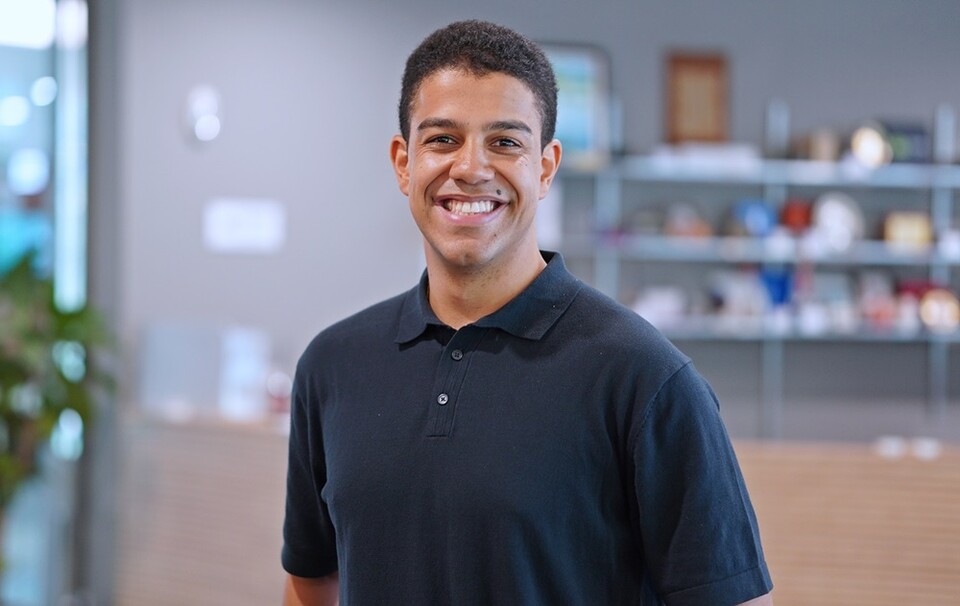
Raoul Moroder, Marketing Manager at JABLY

Reporter Thomas Frederiksen (left) interviewing Raoul Moroder from JABLY (right)
“Our AI-Powered SaaS Architecture Simplifies Visa Bureaucracy and Job Matching, Building an All-in-One Pathway for Global Talent to Settle Legally in Korea.”
PANGYO, GYEONGGI-DO, SOUTH KOREA, August 20, 2026 /EINPresswire.com/ -- JABLY (CEO Hyung Ju Kim) is an IT enterprise establishing an essential ecosystem that enables global talent to settle in South Korea and grow successfully. Beyond isolated personal difficulties, the firm’s ultimate vision is to deploy technology to address structural hurdles in international education, such as unequal access, illegal employment, and steep administrative burdens.Targeting a 2026 release, JABLY is developing Cloud K-tag, an AI-powered career development SaaS platform designed to assist domestic and international students in securing legal employment and managing their visa statuses.
The core competitive edge of this platform lies in its all-in-one, integrated architecture, which addresses the entire lifecycle of global talent—spanning university matching, visa applications, post-arrival settlement support, and employment assistance—within a single platform. Following their entry, the company works with local partners to deliver initial settlement services, including mobile data plans, Korean-language education, and online banking. It then closely supports students through job searches during school and post-graduation, up to their eventual transition to professional E-7 employment visas. By deploying automated workflows, JABLY resolves service fragmentation and offers its solutions at highly competitive rates compared to traditional, high-cost study-abroad agencies or consulting firms.
JABLY is targeting business opportunities across the entire B2G, B2B, and B2C landscapes. To help mitigate domestic labor shortages and population declines, the firm is collaborating with government initiatives such as the Regional Innovation System & Education (RISE) project, initially focusing on Vietnam, Uzbekistan, and Mongolia—the top three source nations for international students in South Korea. Looking ahead, JABLY is preparing to expand into markets experiencing similar demographic crises, such as Japan and Taiwan, and has established strong networks with leading local partners, including Vietnam’s MoMo Pay.
The company’s business milestones and future growth engines are equally notable. JABLY has signed MOUs with eight overseas partners and established strategic agreements with major logistics centers, including Coupang and Lotte Global Logistics, as well as the Small and Medium Business Development Association. The startup has secured seed funding from institutions like the Jeonnam Creative Economy Innovation Center, and its technological potential has been recognized through its selection for the TIPS program and the Technology Guarantee Fund’s Venture Camp (18th Cohort). Notably, on June 22, 2026, JABLY successfully kicked off a Proof of Concept (PoC) for its comprehensive study abroad platform in partnership with Vietnam’s MoMo Pay and Shinhan Financial Group. To secure top-tier IT development talent, foster cooperation with global tech corporations, and tap into government-led R&D policy support, JABLY established its operational base in Pangyo, where it continues to accelerate its growth.
Pangyo TV met with JABLY Global Team Leader and Marketing Manager Raoul Moroder at the Startup Campus in Pangyo Techno Valley to discuss their AI-driven HR tech ecosystem, the realities of international student visas, and their strategic regional expansion plans. Reporter Thomas Frederiksen conducted the interview.
Q1. Thomas Frederiksen, Reporter: Can you tell us a little bit about what kind of company JABLY is? What is the story behind the company?
A. Raoul Moroder, Marketing Manager at JABLY: Starting from the name, JABLY is a combination of two words: “job” and “assembly.” Our goal, since JABLY was founded in October of 2023, has been to create an ecosystem where international students can come to Korea, thrive, settle down, and build their careers in the country. As we know, if you want to build your roots in another country, one of the main points is, of course, securing a job. We also know that Korea is a growing country where startups want to expand abroad very early in their stages, and therefore, they need global talent to do so. Under current immigration laws, international students face immense visa and job hurdles. Our platform aims to ease these heavy administrative burdens using digital and automated processes.
Q2. Thomas Frederiksen: What do you think are some of the necessities that make this sort of program necessary for students? What can you offer these students who are coming here?
A. Raoul Moroder: Lately, there have been more and more opportunities for foreigners to find jobs in Korea. However, what we do differently is use technology—primarily AI—to connect companies that need global talent to expand abroad with students looking for the exact company that fits their preferences, based on all the information they have. We use multiple AI agents to provide a seamless experience for both job seekers and employers. The system matches appropriate talent to corporations based on quantitative data, including visa types, remaining periods of stay, and permissible working hours, as well as international students’ technical capabilities and language proficiencies.
Q3. Thomas Frederiksen: It feels like a win-win situation for both sides. What kind of platform is it actually? How does this process take place?
A. Raoul Moroder: It is definitely a win-win situation for both, and I would also include the government in that, as the Korean government is actively trying to attract more international talent to address the labor shortage and population decline. We are currently developing a SaaS (Software as a Service) platform. To put it simply, we can think of Netflix as an example: it’s subscription-based and runs in the cloud. Once implemented, it is easy to expand or add more services. We are nearing the end of our development phase, and we plan to launch the platform this year. The K-TAG service matches talent and integrates directly with the South Korean Ministry of Justice’s systems to streamline the complex administrative procedures required for employment visa applications.
Q4. Thomas Frederiksen: Have you been part of this international student framework in Korea? Do you have personal experience with the difficulties exchange students face?
A. Raoul Moroder: Yes, absolutely. On a personal note, I came here as an international student in 2021. I fell in love with this country and all the benefits and perks it offers, so I decided to become a full-time student here. Of course, I faced many of the difficulties we’ve mentioned. I’m not talking only about the language barrier, but also about visa difficulties—such as how to transfer to a working permit to work part-time as a student—as well as how to settle down, open a bank account when you’re not fluent in Korean, or get insurance. After I joined JABLY in its early stages, I worked alongside one of our co-founders, who is also a foreigner. Together, we were able to tailor a solution that we wished we had back when we were students. We are partnering with major firms across telecommunications, banking, and health insurance to integrate these exact services as a true one-stop experience.
Q5. Thomas Frederiksen: I really like that the company focuses not only on job matching, but on providing a single, unified hub for all expat services. How are you expanding this network before launch?
A. Raoul Moroder: Since the international student population is growing steadily, we plan to assist students not only after they arrive in Korea but also before they come here. We are developing features to match prospective students with Korean universities, and we have already signed MOUs with more than 30 universities nationwide. Currently, we are targeting audiences from Vietnam, Mongolia, and Uzbekistan, as they represent the majority of international students here in Korea. Last week, we traveled to Vietnam, and together with MoMo Pay—a global leader and the Vietnamese counterpart to Kakao—we aimed to facilitate Vietnamese students’ access to international education. We started a social innovation program there that allows students from challenging backgrounds to come to Korea and receive an international education.
Q6. Thomas Frederiksen: We’ve touched on why international students want to come here, but what is the incentive on the Korean side for businesses to hire them?
A. Raoul Moroder: That’s a great question. Being here in Pangyo Techno Valley, we are surrounded by some of the best startups in the country. One thing we’ve realized since settling down in this area is that if a startup wants to go global, it needs to do so in its early stages rather than waiting until it is past the startup phase. And who knows foreign markets better than international students themselves? Having a global team gives a startup a more global outlook, making it more attractive to international investors. Lastly, it brings multiple perspectives to the company, especially as the strict Korean corporate culture loosens.
Q7. Thomas Frederiksen: Which other countries would you be interested in expanding into, and do you have any upcoming regional events on your calendar?
A. Raoul Moroder: Countries facing similar demographic crises of labor shortages and population decline include Japan and Taiwan. We are already in talks with partners in these two countries to offer similar services. Locally, we are collaborating closely with the Jeonnam region. Under the government’s RISE program, we are working with Chonnam National University on an educational program called “J-Global in Mandeli”. We help international students from CNU develop the marketing and IT skills necessary to transition from being students to full-time employees in the region. The students develop their own projects and pitch them to local companies, with the top performers securing paid internships. At the end of the program, on August 21, we will host a Demo Day in Yeosu. We want to invite international students from across Korea to attend, and accommodation is on us.
Q8. Thomas Frederiksen: Since we are filming here at the Startup Campus, what are your thoughts on Pangyo Techno Valley as an innovation hub for JABLY?
A. Raoul Moroder: To secure top-tier IT development talent, foster cooperation with global tech corporations, and tap into government-led R&D support, Pangyo is the absolute ideal ecosystem. It provides the ultimate testing ground where we can easily collaborate and share tech advice with nearby companies. Recently, we even presented our platform during a surprise visit by a delegation of EU ambassadors to Pangyo, drawing an enthusiastic response. Our ultimate goal is to become the global standard for secure identity and biometric access in recruitment, restoring data sovereignty and enabling seamless mobility for international talent.
Kim Seung Yeon
Gyeonggi Business & Science Accelerator
+82 31-776-4834
email us here
Visit us on social media:
LinkedIn
Instagram
Facebook
YouTube
Other
Legal Disclaimer:
EIN Presswire provides this news content "as is" without warranty of any kind. We do not accept any responsibility or liability for the accuracy, content, images, videos, licenses, completeness, legality, or reliability of the information contained in this article. If you have any complaints or copyright issues related to this article, kindly contact the author above.
